Anatomy of a Slow-Rising Squishy: TPR Skin, Gel Fill and the Rebound Test
- Share
- publisher
- PlayGoro
- Issue Time
- Nov 3,2026
Summary
We cut slow-rising squishies open every week. What the shell, fill and stopwatch test reveal — straight from the PlayGoro QC bench in Yiwu.
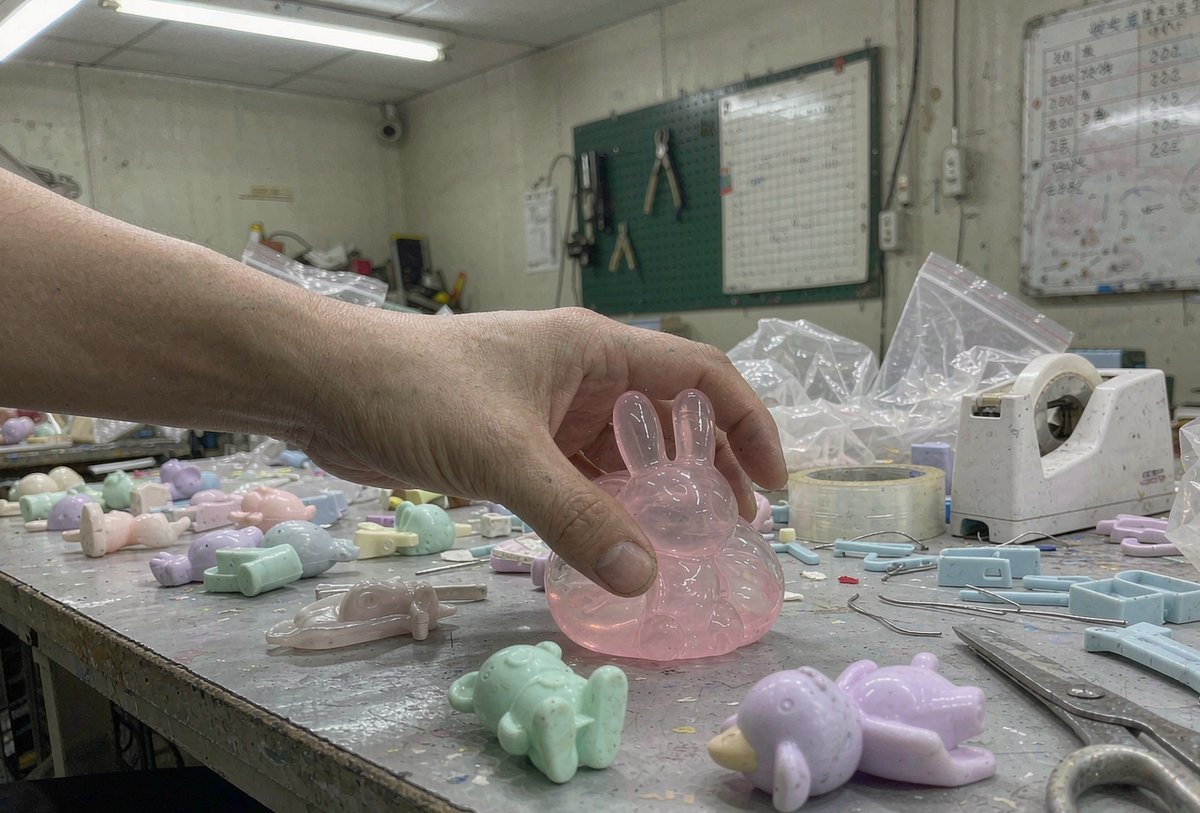
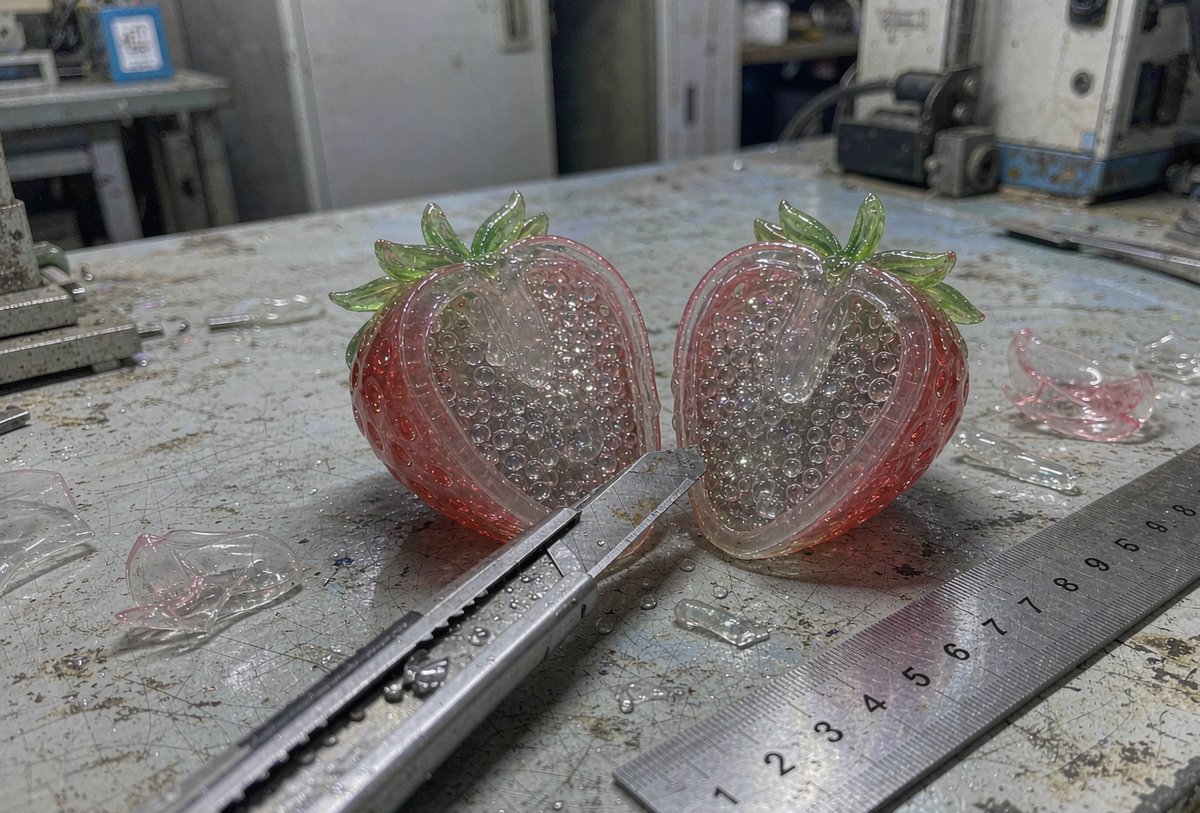
Every week, a few squishies on our line end up under the knife. Not because an order went wrong — because this is how we check that nothing will. We cut rejected units open, look at what is inside, and feed what we see back into the next batch.
If you buy or design squishies, here is what we see when the shell comes off. Four things decide whether a slow-rising squishy feels right and survives: the skin, the fill, the form, and the rebound.
The Skin: One Piece of Translucent TPR
The outer layer is toy-grade TPR with a jelly look — translucent, softly glossy, tinted in the material itself. The color goes into the compound before molding, so the shade lives in the wall, not in a coat of paint. That is why a pale macaron pink or a mint green keeps its tone after months of squeezing instead of flaking off at the high spots.
Thickness is the quiet variable. Too thin, the shell creases white and splits at stress corners. Too thick, the toy stops feeling like a squishy and starts feeling like a rubber ball. On a figurine, the ears and the tips of limbs are where we watch the wall closest — the thinnest section is always the first to fail.
And getting a brand color right in this material is its own kind of work — your Pantone doesn't survive contact with soft TPR unchanged.
The Fill: What Actually Makes It Slow
Press a squishy flat and it comes back over a few seconds. That motion is not the shell — the shell only holds the shape. The rise comes from the fill: a dense gel compound inside the cavity, with air pockets and, in some series, glitter suspended through it. When you squeeze, the gel has to move around those pockets. That resistance is the slow part of slow-rising.
Fill weight is a trade-off. More fill gives a fuller hand feel and a slower rise, but pushes pressure into the corners of the shell. Less fill rebounds fast and feels hollow. When a buyer asks us to change rebound speed, this is the first dial we turn — not the shell.
The fill is also the part regulators look at hardest. This year a sand-filled squishy was recalled in the EU after asbestos was found in the filling. What is inside counts as much as what is outside.
The Form: No Glue, No Seams
Cheaper squishies are two shells glued together. The glue line is where they fail — peel it open and the fill ends up in a kid's hand. Our figurine series are molded as one piece, in a single shot, with zero splicing seams. Tooling discipline costs more up front; it saves more in returns. You can see it in our one-piece jelly-look figurines — squeeze the ear hard and there is no seam waiting to give up.
The Rebound: How We Time It
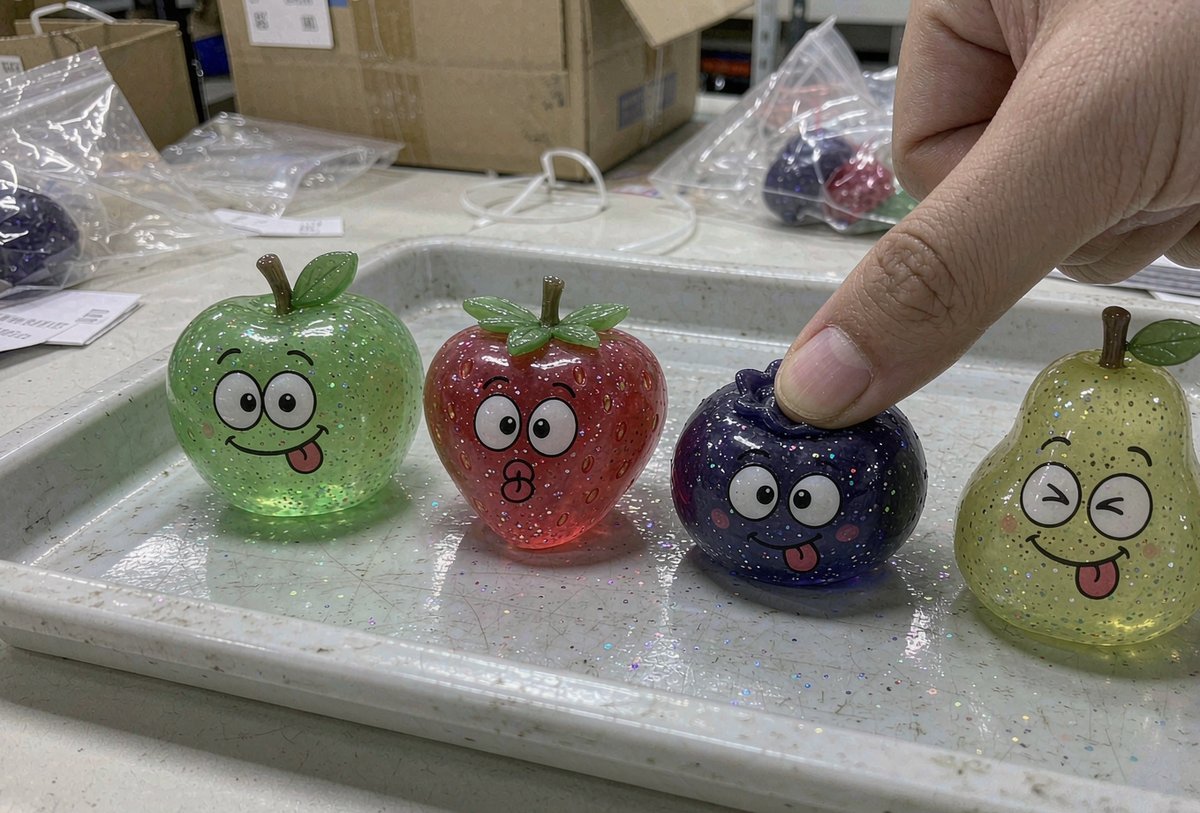
Every batch gets a stopwatch. One worker presses a toy flat on the tray, lifts, and times how long the surface takes to settle back. We do not chase one magic number — a full-size figurine and a 5.5 cm fruit are allowed to rise at different speeds. What we reject is drift: the same design failing to match its own earlier batches. Slow drift usually means the fill recipe moved. Fast recovery with a stiff feel usually means the wall came out thick.
The Cut Check: What We Look For
- Cloudy or creased skin at thin sections — wall too thin
- Fill pulling away from the shell — under-fill or an air pocket too big
- Glue or splice lines — should not exist on a one-piece design
- Rebound drifting from the batch standard — fill recipe moved
- Slow leak after repeated squeezes — seam or pinhole failure
| What a buyer feels | What controls it on our line |
|---|---|
| Hand softness | TPR wall thickness |
| Speed of the rise | Fill density and air content |
| Whether it ever leaks | One-piece molding vs glued shells |
| Color after months of play | Tint in the material, not paint |
Most marketing photos stop at the surface. The surface is the part we spend the least time arguing about — the inside is where a squishy earns its price.
Next Step
Sourcing a slow-rising squishy? Cut the sample you already sell open and look at what is inside. Or send us your sketch or reference — we start with a 3D-printed prototype so you can hold the shape before any tooling is cut. Browse our newest TPR squishy designs or request a sample.