How to Read a Squishy Sample: Slow-Rising vs Fast-Rebound
- Share
- publisher
- PlayGoro
- Issue Time
- Oct 16,2026
Summary
Most wholesale squishy orders are decided on a three-second squeeze. Here is how to test skin, filling, rebound time and seam before you commit.
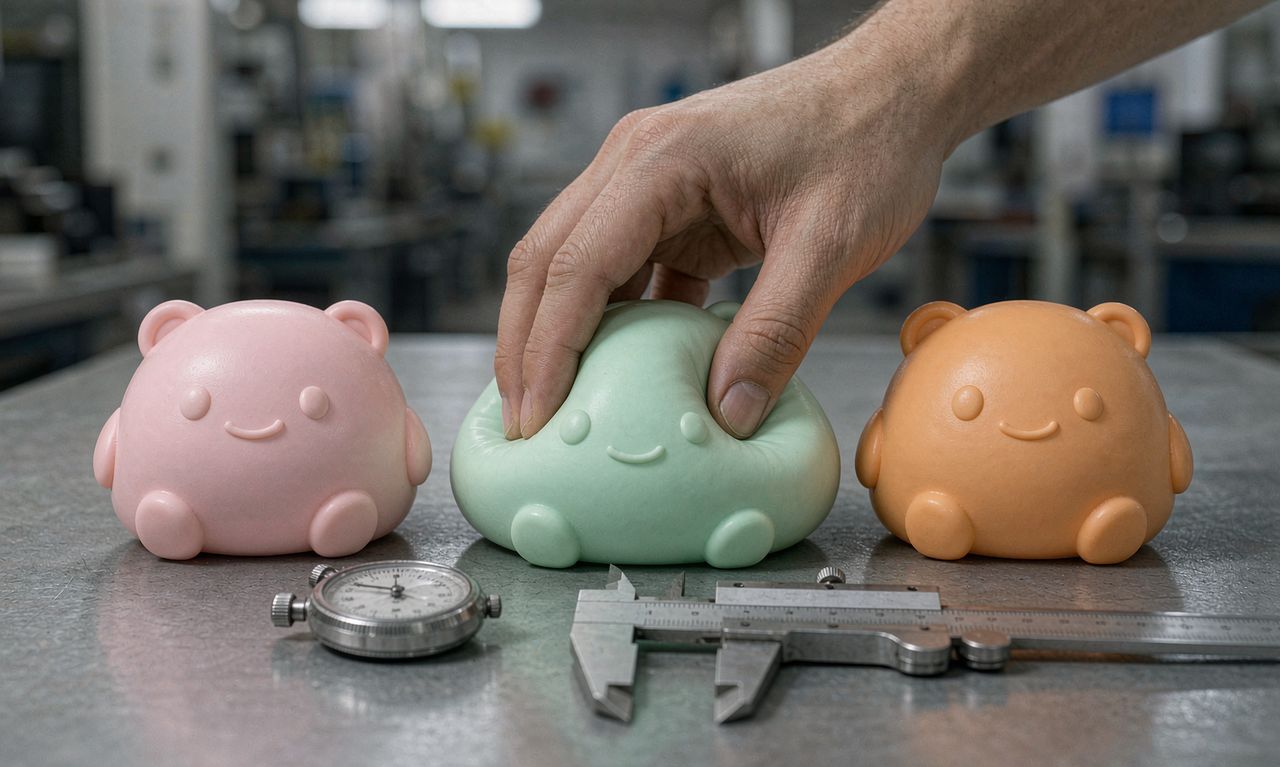
Materials & QC · reading a squishy sample · from the factory floor in Yiwu
Almost every squishy order we have ever taken was decided in about three seconds. A buyer picks up the sample, squeezes it once, smiles, and asks about MOQ. I understand why — the product is supposed to feel good in one squeeze. But three seconds is not enough time to learn the four things that decide whether you reorder in six months.
I am on the factory side of this, in Yiwu. Here is what we would check if we were the buyer and had a competitor's sample in front of us.
Q: What should I check on a squishy sample before ordering?
Five things: rebound time, seam quality, weight and fill tolerance, smell, and any metal or painted trim. Rebound is the fastest tell — a slow-rising unit should take several seconds to come back, while a fast-rebound unit returns in under a second. Test at room temperature and write the number on the sample.
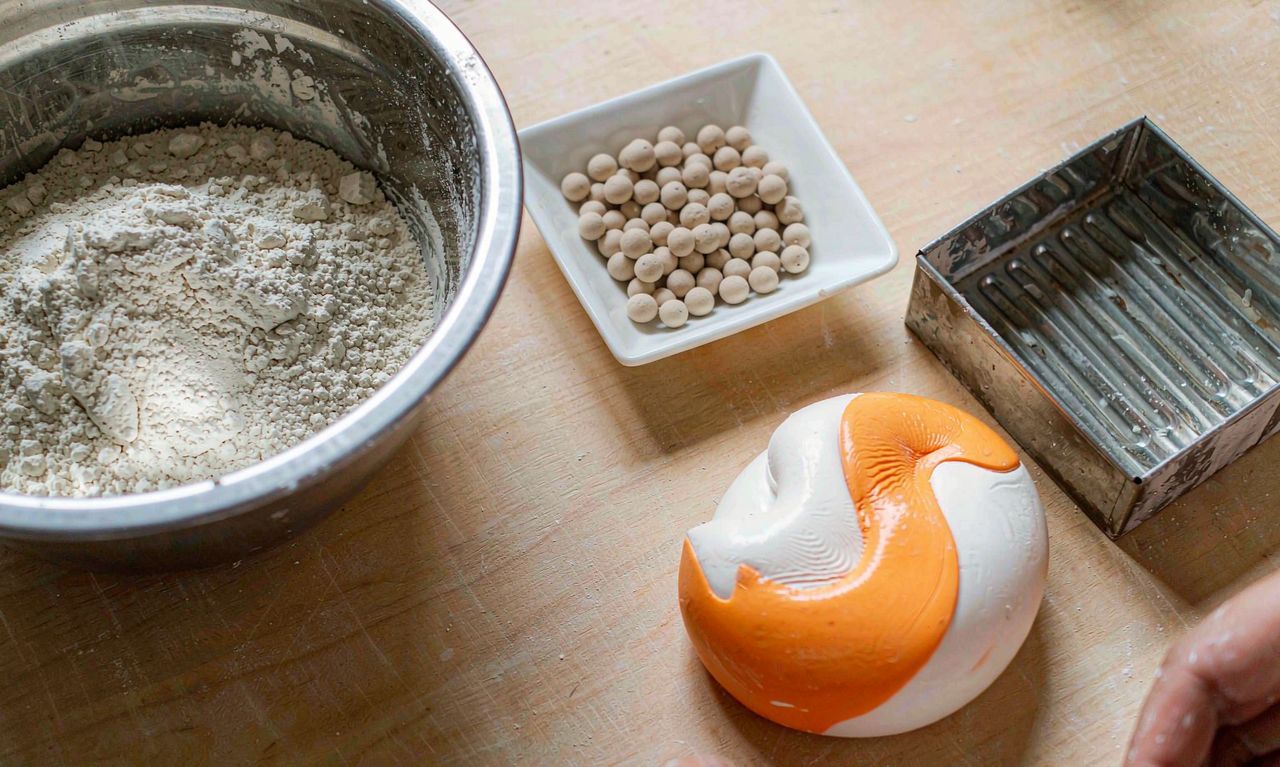
It is two products stacked: a skin and a filling
A squishy that feels "premium" is not one material. It is a thin skin wrapped around a filling, and either half can be the reason a batch disappoints.
| Filling family | Feel and rebound | Weight | Watch out for |
|---|---|---|---|
| Flour-based | Dry, soft, medium-slow return | Light–medium | Settling if under-filled; seam stress over time |
| Foam beads | Airy, quickest of the soft fills | Lightest | Crunch feel not for every market |
| Maltose | Dense, syrupy, slowest return | Heavy | Behaviour changes with temperature; sealing matters |
| Gel | Cool, slippery, medium return | Heavy | Leak risk if the seam is thin; heavier freight |
Filling choice rewrites rebound speed, unit weight and freight cost before the shape is even decided. Ask for it by name.
Worth stating plainly, because it comes up in nearly every first conversation: a food-shaped squishy is a design decision, not a safety claim. Dumpling-shaped does not mean food-safe. Our shells are toy-grade TPR, and we describe them that way in writing.
Rebound time is the spec nobody writes down
Slow-rising is the phrase on every wholesale listing in 2026, and almost none of them define it. In practice it is a stopwatch measurement, and you can run it yourself on any sample:
- Squeeze. Compress the squishy fully for about five seconds.
- Release and time. Start counting the moment you let go.
- Stop at recovery. End when the shape has returned to roughly its original form.
| Property | Ask the supplier for | Red flag |
|---|---|---|
| Rebound time | A number in seconds, measured at room temperature (our slow-rising constructions sit around 6–8s) | "Slow-rising" with no number, or a snap-back under 1s |
| Skin | Stated TPR shell construction and seam method | No answer on skin thickness or seam |
| Filling | Filling family by name, plus fill tolerance | "Soft filling" as the whole answer |
| Weight | Unit weight and tolerance per size | Weight varies batch to batch |
| Trim | Test reports for metal or painted parts, per target market | Paperwork for "the product family", not the part |
One caution: rebound is temperature-sensitive. Test your samples together at room temperature. A squishy evaluated in an air-conditioned office and one evaluated on a loading dock in July will not give you the same number.
How the thing actually gets made
Understanding the sequence explains most cost and lead-time arguments before they start:
- Shape. A design becomes a printed prototype first, so you can hold it before anybody spends money on tooling.
- Tooling. A mould for the shell. Simple, clean geometry tools quickly; deep undercuts and fine detail do not.
- Skin and seam. Shell formed, joined, inspected. Seam quality is where cheap production shows up first.
- Filling and sealing. The unit is filled, sealed and left to settle. The filling choice dictates how this step behaves.
- QC and packing. Squeeze checks, visual checks, then display boxes or bulk cartons.
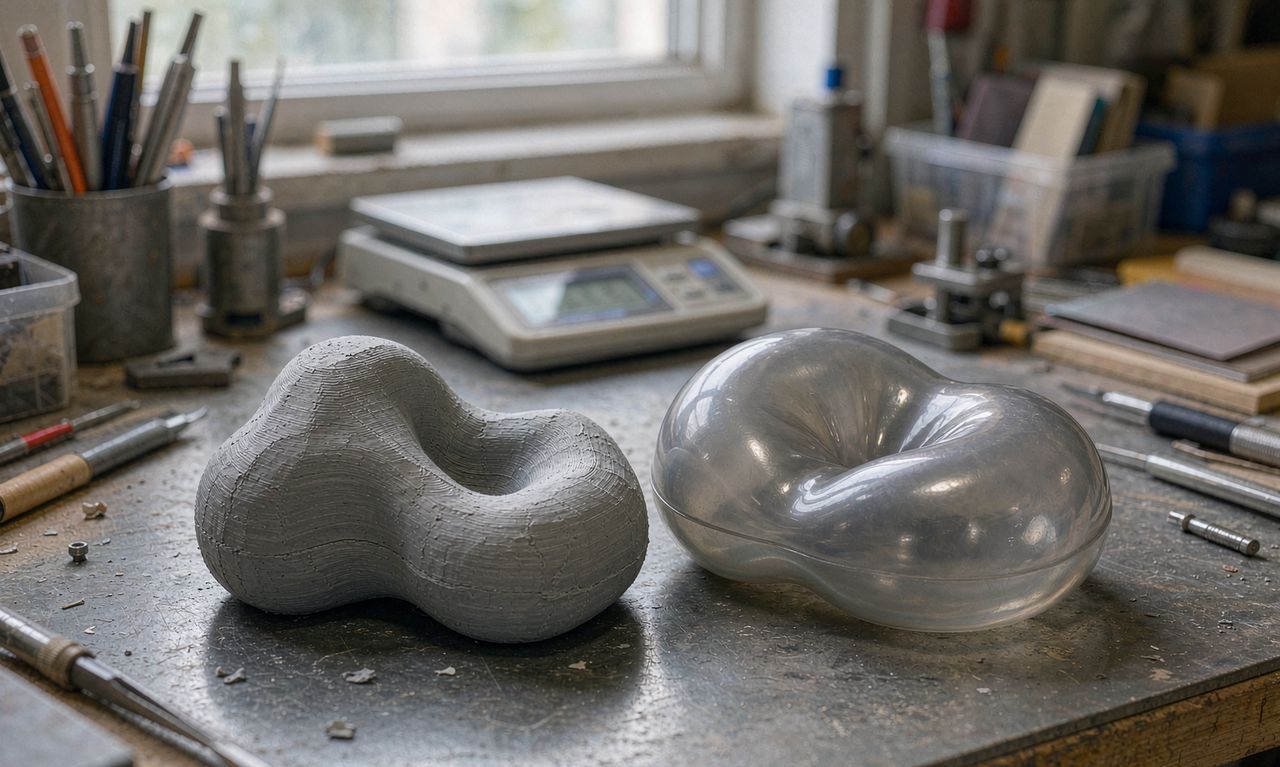
Complexity is the real cost driver, not material. On straightforward shapes a well-run line here can produce tens of thousands of units a day; add fine sculpted detail and that number drops hard, which is why complicated designs queue. It is also why we decline realistic, ultra-high-detail sculpts — that is not where our squishy factory capability earns its money, and pretending otherwise would cost you a season.
The five-point sample check
| # | Check | How | What fails |
|---|---|---|---|
| 1 | Rebound | Five-second squeeze, stopwatch on the release, room temperature | Snaps back instantly; or returns unevenly, one side first |
| 2 | Seam | Squeeze to maximum stretch, run a thumb along the seam | Thinning, shine or pinholes under stretch |
| 3 | Weight and balance | Weigh it; ask for the fill tolerance | Fill settles to one side; unit feels lopsided in hand |
| 4 | Smell | Open the bag, step away, come back in a minute | Odour that fills the room is a process problem, not a design one |
| 5 | Decorations and trim | Ask which test reports the supplier holds for that part, in your market | Metal trim with no paperwork — the failure mode behind European shelf pulls |
If a supplier can answer all five without leaving the room, you have found a manufacturing partner. If the answers get vague at number three, the price you were quoted is not the price you are going to pay. If you are earlier in the process, squishy sourcing risk covers the commercial questions and the three liabilities buyers miss covers the ones that turn into returns.
Is slow-rising better than fast-rebound?
Neither is better, they are different products. Slow-rising reads as premium and suits adult and desk channels; fast-rebound suits high-volume impulse and younger buyers at a lower unit cost. Decide the shelf first, then the spec.
Can you match a sample we already have?
Usually yes, within our scope. Send the sample and tell us what you like about it — rebound speed, weight, skin feel — and we will build toward it in custom TPR squishy development rather than guessing.
What do you need from us to quote?
A shape or reference, an approximate size, the filling direction, the channel you sell into, and a rough volume. Our wholesale squishy catalogue shows the shapes we already run. With those details we can give you a real answer, including lead time, instead of a range designed to keep you talking — tell us the market you sell into and we will be specific.
Who pays for samples?
Sample and prototype costs plus freight sit with the buyer. We start with a printed prototype so the shape decision is made before tooling is committed.
Have a sample you want matched?
Send the shape, the feel and the channel. We will tell you what we can hold and what we would change, then start with a printed prototype.
Start with a sample requestReferences
- The Business Research Company, Stress Toy Global Market Report 2026 — category context: USD 5.88bn (2025) to USD 6.26bn (2026) at 6.5% CAGR.
- Circana, US toy retail tracking, first half 2026 — squishy sales approximately USD 297m on 58.6m units, roughly 4x year on year.
- Yiwu trade media, 2026 — production practice: simple styles running tens of thousands of units per day, complex styles materially slower.
- European market surveillance (RAPEX) reporting, 2026 — stress toys pulled for excessive nickel release from metal components.